Prime Minister of India Narendra Modi (retranslated): Your Excellency Vladimir Putin, my dear friend,
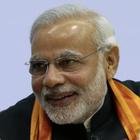
Representatives of the two countries, and our friends from India, good afternoon.
I am delighted to welcome President Putin to the 23rd Russia – India Annual Summit.
President Vladimir Putin’s visit to India is taking place at a time marked by several historical dates in our relations. President Putin laid the groundwork for our strategic cooperation 25 years ago, and 15 years ago, in 2010, we upgraded our partnership to the level of a special privileged strategic partnership.
Over the past 25 years, President Putin has been relentless in promoting these relations by demonstrating his wise leadership and vision. Regardless of the circumstances, it is his leadership that has reinforced our mutual relations and enabled us to achieve new heights.
I would like to express my sincere gratitude to President Putin for his friendship and for his unwavering commitment to working with India.
Friends,
The world has faced numerous ups and downs over the past 80 years, during which humankind has had to endure many crises and challenges. And throughout this time, the friendship between Russia and India has successfully weathered these storms. These relations are based on mutual respect and deep trust and have invariably stood the test of time.
Today, we discussed our ties and cooperation in all their aspects with a view to creating an even more solid foundation.
We want to reinforce our economic cooperation and elevate it to a new level. This is the objective we share and it is our shared priority. To make this a reality, we have agreed to implement a programme for economic cooperation until 2030. It will provide for diversifying our trade and investment, making them more balanced and sustainable. At the same time, it will help unlock new dimensions in our cooperation.
Today, President Putin and I will be taking part in the Russia – India Business Forum. I am convinced that this platform will also help strengthen our business ties and open new doors for exports, joint manufacture and technical innovation.
Both countries have been proactive in working on a free trade agreement between the Eurasian Economic Union and our country.
Our cooperation in agriculture and fertilisers is extremely important for our food security and the prosperity of our farmers.
I am happy that our countries will work together to promote our mutual production of urea.
Friends, promoting connectivity between our countries is another priority for us.
We will redouble our efforts regarding the discussions on the North-South International Transport Corridor and the Vladivostok-Chennai Maritime Corridor.
I am confident that we will effectively cooperate in the interests of promoting polar trade via local trade routes. We have offered an opportunity to strengthen our cooperation in the Arctic, which will create new jobs for Indian young people.
At the same time, our deep cooperation in shipbuilding will help us boost our joint initiatives. This is yet another important example of our mutually beneficial cooperation, which is increasing the number of jobs and skills while strengthening regional connectivity.
Energy security is another important pillar of partnership between Russia and India. Our cooperation in the field of civilian nuclear energy, which is rooted in our history, has helped us uphold our commitment to providing clean energy, which is extremely important for both countries.
I have no doubt that our mutually beneficial cooperation in the field of critical minerals will also be important for a safe and diversified provision of resources to the world.
We also maintain our cooperation in such areas as clean energy, high technologies and modern industries.
Friends,
Our cultural relations and ties between individual representatives of our countries are of special importance for relations between Russia and India. Over the past decades, our peoples have demonstrated respect and admiration for each other’s cultures, and we have coordinated various measures to further strengthen this cooperation.
The recent opening of two Indian consulates in Russia is a significant step forward, facilitating contacts for all our citizens and bringing our nations even closer together.
This October, hundreds of thousands of pilgrims received blessings at the sacred relics of Buddha Shakyamuni in Kalmykia. I am confident that we will soon implement a 30-day visa-free regime for tourist groups, which will greatly enhance travel between our countries. This measure will not only bring our peoples closer but also invigorate our societies and unlock new opportunities. I am therefore pleased that today we were able to sign two key agreements to advance this initiative.
Our collaboration will also deepen in education and professional development, including through increased student and academic exchanges.
Friends,
Today, we discussed a range of pressing regional and global issues. On Ukraine, India’s position has been consistent from the outset: we stand for peace. We welcome all initiatives and efforts aimed at achieving a peaceful, long-term resolution of this conflict. India has always been ready to support such efforts, and we will continue to do so.
India and Russia have always supported one another and worked shoulder to shoulder in the fight against terrorism. The terrorist attack in Pahalgam and the cowardly atrocity at Crocus City Hall are connected by a common, hateful ideology. India firmly believes that terrorism constitutes a direct assault on universal human values. Our unity within the global community is the only effective way to combat this evil.
We cooperate closely within the UN, the G20, the SCO, BRICS, and other multilateral forums. We will continue this essential dialogue and cooperation across all these platforms.
Your Excellency,
I am confident that our enduring friendship will provide the strength needed to address global challenges. Together, we can help lead the way towards a more prosperous future.
Once again, I thank you and all members of your delegation for your visit to India. Thank you very much.
President of Russia Vladimir Putin: Mr Prime Minister, dear friend,
Ladies and gentlemen,
My sincere thanks to the President of the Republic of India, Droupadi Murmu, to you, Mr Prime Minister, and to all our Indian colleagues for the exceptionally warm and cordial welcome extended to the Russian delegation.
The discussions we have just concluded with our Indian colleagues, along with our highly productive one-on-one conversation last night – for which I thank you again, Mr Modi, for your generous hospitality – were held in a constructive and friendly spirit, reflecting the privileged partnership between Russia and India.
I would note that the Prime Minister and I have established a close working and personal rapport. We have met at the SCO summit in September, we maintain regular contact by telephone and personally oversee the development of our strategic cooperation across all key areas, as well as the progress of major bilateral projects.
Today, with the participation of our delegations, we conducted a thorough and comprehensive review of the entire spectrum of Russian-Indian cooperation. We also exchanged views on current international and regional issues.
The joint statement we have adopted outlines clear priorities for advancing our ties in politics, security, trade, the economy, and cultural and humanitarian affairs. As you have seen, this was complemented by the signing of a substantial package of intergovernmental, interdepartmental, and corporate agreements.
Many of these documents are aimed at expanding our economic partnership. This is only natural, as our nations are important partners in trade, investment, and technology. Last year, our bilateral trade grew by a further 12 percent, reaching a new record. While various estimates differ slightly, the consensus places the figure somewhere between US$64 and US$65 billion. We project trade will stand at a comparable level by year’s end.
That said, we believe there is clear potential to increase this volume to US$100 billion. To realise this ambitious goal, we have now agreed upon a joint Programme for the Development of Russian-Indian Economic Cooperation until 2030. This comprehensive roadmap provides clear guidelines. Our intergovernmental commission and the relevant economic ministries and agencies are tasked with removing barriers to the flows of goods and capital, implementing joint industrial projects, and deepening our collaboration in technology and investment.
Today, His Excellency the Prime Minister shared a comprehensive list of issues with us. It goes without saying that both Russia and India will be extremely diligent and responsive in reviewing them. Make no mistake, we will work on this matter.
Of course, having India create a free trade zone with the Eurasian Economic Union would help boost Russia-India business ties. The effort to draft an agreement to this effect is already in progress.
I must express my satisfaction with the fact that the two countries have been consistent in their commitment to switching to national currencies in mutual transactions. Their share in business deals has already reached 96 percent. Our two countries have developed resilient interbank channels for lending and financial transactions. Russian economic actors have been making wider use of the rupees they generate from export contracts. Major joint projects receive their funding in Russian rubles.
There has been positive momentum in our energy partnership. Russia is a reliable supplier of energy resources and everything India needs for developing its energy sector. We are ready to continue ensuring uninterrupted fuel supplies for the Indian economy to support its rapid expansion.
Of course, our bilateral energy cooperation goes far beyond this horizon. The flagship project to build India’s biggest NPP, Kudankulam, is underway. Two out of six reactors have been connected to the power grid, while the other four are in the engineering and construction stages.
Once this NPP reaches its full capacity, it will make a meaningful contribution to India’s energy mix, helping Indian companies and households access affordable and clean energy. We believe that building small modular reactors and floating NPPs could also be relevant, just as using nuclear technology for non-energy purposes, including in healthcare, agriculture and other sectors.
We are also working with our Indian partners to create new effective international transport logistics routes. This includes a project to create the North-South corridor linking Russia and Belarus to the Indian Ocean. Infrastructure development along the Trans-Arctic Transport Corridor, including the Northern Sea Route as its main artery, offers ample opportunities for expanding bilateral trade.
There are many other economic sectors in which Russia and India have built a positive track record. We are working on joint initiatives in manufacturing, machine building, digital technology, space exploration and other research-intensive domains.
For example, a business agreement that was signed as part of the visit provides for building a major Russian-Indian pharmaceutical plant in the Kaluga Region for producing high-quality anticancer medicine using cutting-edge Indian technology. At the same time, Russian companies will start producing their goods as part of the Make in India programme, which is Prime Minister Modi’s flagship project.
Prospects for strengthening interaction between Russian and Indian entrepreneurs and business communities are being discussed in detail at the business forum that is currently underway in New Delhi. Mr Prime Minister and I will attend its plenary session later today.
Russian-Indian humanitarian cooperation is ongoing in many spheres. Our peoples have been sincerely interested in each other’s traditions, history and spiritual values for centuries. Our scientific and educational contacts, as well as youth and public exchanges are actively developing. The regular cross festivals of Russian and Indian films invariably enjoy success. Mutual tourist flows grow every year.
The Russian RT channel will begin broadcasting to India today. This will certainly help the Indian audience learn more about Russia and Russians and acquire objective information about current developments in our country.
Our discussions on key global and regional issues have reaffirmed the similarity of our countries’ positions. Russia and India pursue an independent and sovereign foreign policy.
We are working together with our allies in BRICS, the SCO and other countries of the Global Majority to promote the shaping of a more just and democratic multipolar world order, and to protect the fundamental principles of international law enshrined in the UN Charter. These include the right of every country to its own path of development, the preservation of its own cultural and civilisational identity, respect for sovereignty and a delicate balance of interests of all members of the international community.
Russia and India, as the founding nations of BRICS, have done and continue to do a great deal to enhance the prestige of that organisation. As you know, India will assume the BRICS chairmanship next year. We will provide all-round assistance to our Indian friends in their work on the current BRICS agenda.
Of course, I would also like to say that Russia and India have traditionally worked closely together in the military-technical sphere. Our country has been assisting the modernisation of the Indian army, including the air defence, air force and navy, for over 50 years.
Overall, we are certainly satisfied with the results of our talks. Our plans include a meeting with President of India Droupadi Murmu. However, I can already express my confidence that this visit and the agreements reached will effectively promote the further strengthening of the Russian-Indian strategic partnership for the benefit of the people of India and Russia.
Thank you.